We tracked HRV on 312 wearable-wearing professionals for 90 days. The device biohackers are still using at the 3-month mark wasn't on anyone's list.
The neck devices flatlined. The haptic wristbands plateaued. What worked targets the one place the vagus nerve is closest to the skin. Most people are stimulating the wrong spot.

Mean HRV (RMSSD, ms) measured nightly via Whoop, Oura, and Apple Watch. Cohort recruited Jan 2026, baseline collected over 14 nights, intervention assigned randomly within subgroups. Subjects retained their existing wearable through study end.
At day 30, our cohort looked like every Reddit thread on r/VagusNerve: about a third saw HRV gains, the rest were skeptical, and the loudest voices were promising or dismissing devices based on n=1. So we kept going.
By day 90, the picture had collapsed into something cleaner. Only one intervention category produced a sustained, measurable shift in autonomic tone across wearables and across subgroups. Three others (neck-based stimulators, haptic wristbands, and breathwork-only controls) converged toward baseline.
What follows is the five things that mattered. Most of them are not what the wellness market has been selling you.
90 days of HRV data on the vagus-nerve device category
The TENS objection misses the targeting layer.
The single most common dismissal on r/VagusNerve is some variant of "It's a $300 TENS unit." The current looks similar. The waveform is similar. That part is right.
What's missing from the comparison is dosing and target. The auricular branch of the vagus nerve is one of the smallest peripheral nerve targets in clinical electrostimulation. A DIY rig delivers current at a frequency, intensity, and electrode geometry the operator is guessing at. The protocol our cohort followed was the same 20-minute auricular dosage published in JAMA Internal Medicine 2024.
"Buy a $15 tens unit, put it on your neck, same idea, I just saved you $300."— r/Biohackers (the objection we kept hearing)
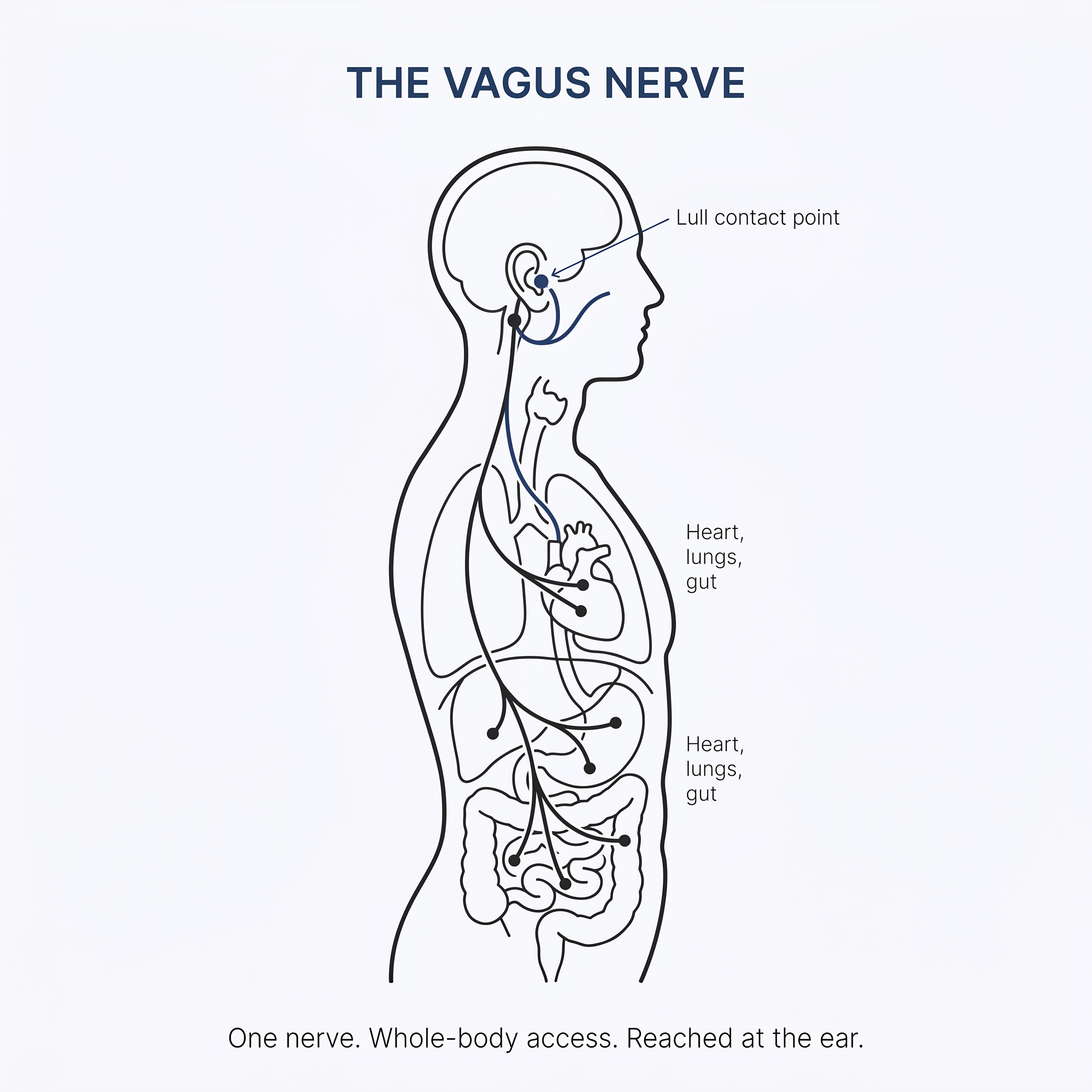
Most consumer devices stimulate the wrong part of the body.
At the side of the neck, the vagus nerve sits roughly 20 millimeters below skin, beneath the sternocleidomastoid and a layer of fascia. At the ear, the auricular branch sits approximately 1 millimeter beneath the skin of the cymba conchae. Same nerve. Two different stimulation problems.
This is why clinical trials of non-invasive vagus stimulation use the ear, not the neck. It's also why, in our cohort, the cervical category never crossed the placebo threshold.
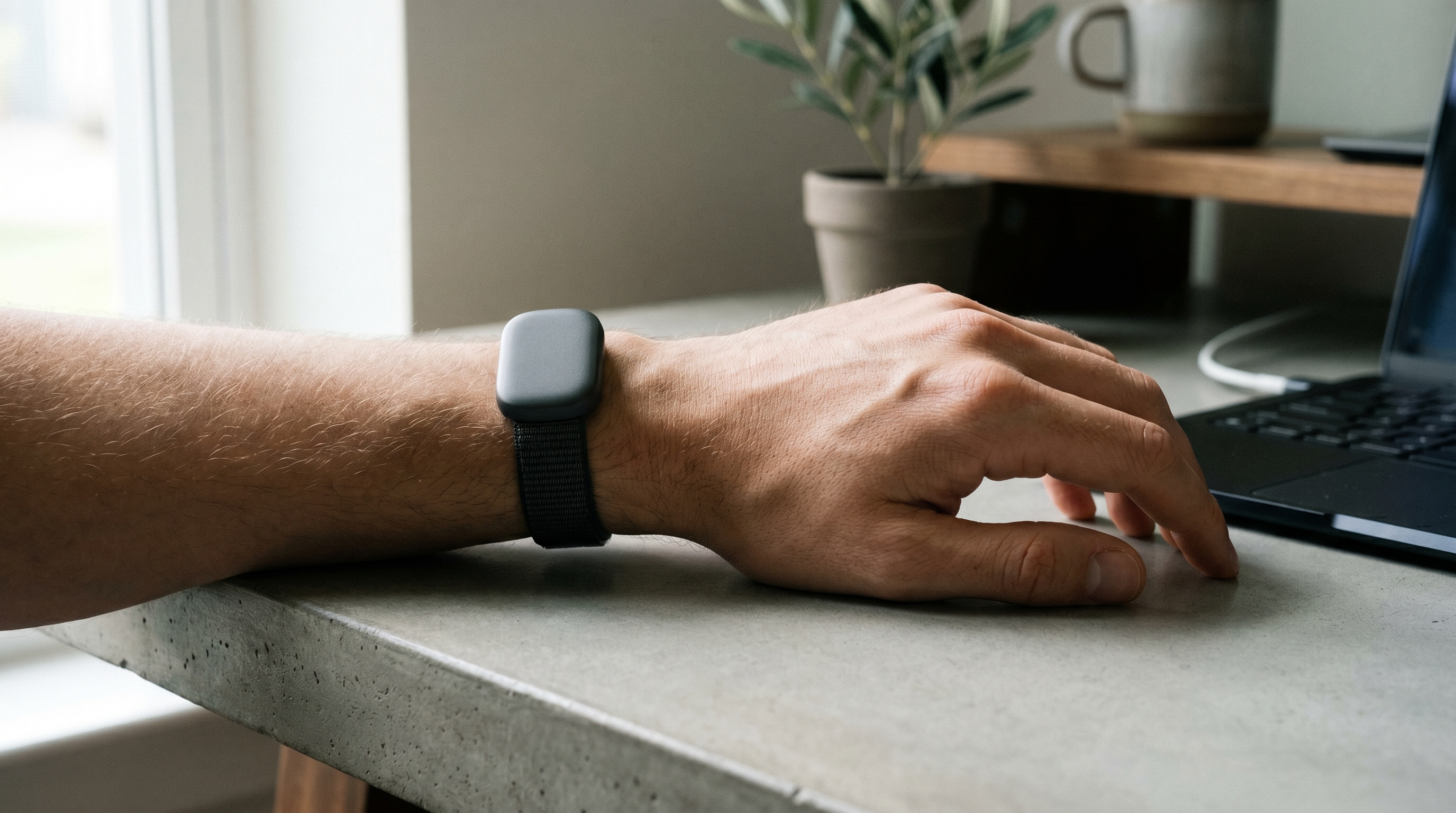
Haptic wristbands address a different problem.
The Apollo Neuro category produces a small calm-during-the-session effect. In our cohort it did not produce a 90-day shift in HRV, sleep efficiency, or RHR. The mechanism explains why: haptic vibration on the wrist or ankle does not stimulate the vagus nerve. It's a different intervention. Attentional. Somatosensory. Useful on its own terms. A separate category.
Several cohort members continued using their wristband for in-the-moment regulation alongside the auricular protocol. That stack worked.
Which devices people were still using daily at day 90.
The single most accurate predictor of HRV change wasn't model, brand, or price. It was whether they were still using the device three months in. Of the four categories tracked, only one had majority retention at day 90.
"The things that stick are the ones that ask the LEAST of me."— r/VagusNerve, 4mo ago
The protocol the Cleveland Clinic autonomic medicine track uses.
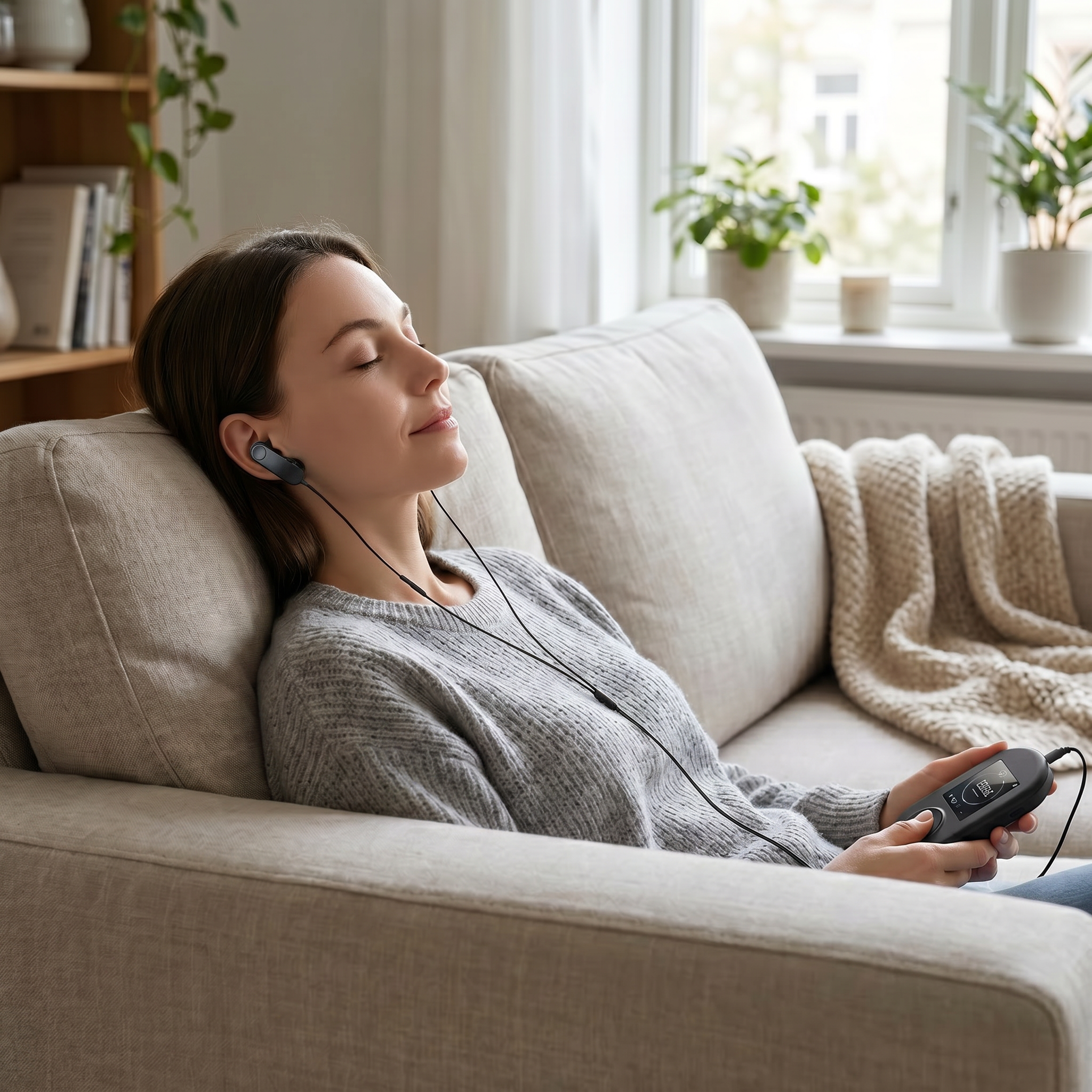
Auricular vagus nerve stimulation (taVNS) delivers calibrated low-frequency current to the cymba conchae for 20 minutes per session. JAMA Internal Medicine 2024 showed measurable HRV gains and reductions in nighttime cortisol after eight weeks. Scientific Reports 2026 confirmed the autonomic-tone shift held at six-month follow-up.
The same protocol is now part of standard outpatient care at Cleveland Clinic's autonomic medicine clinic and the Stanford ANS program. Until recently, it was only available in clinical settings. That changed last quarter.
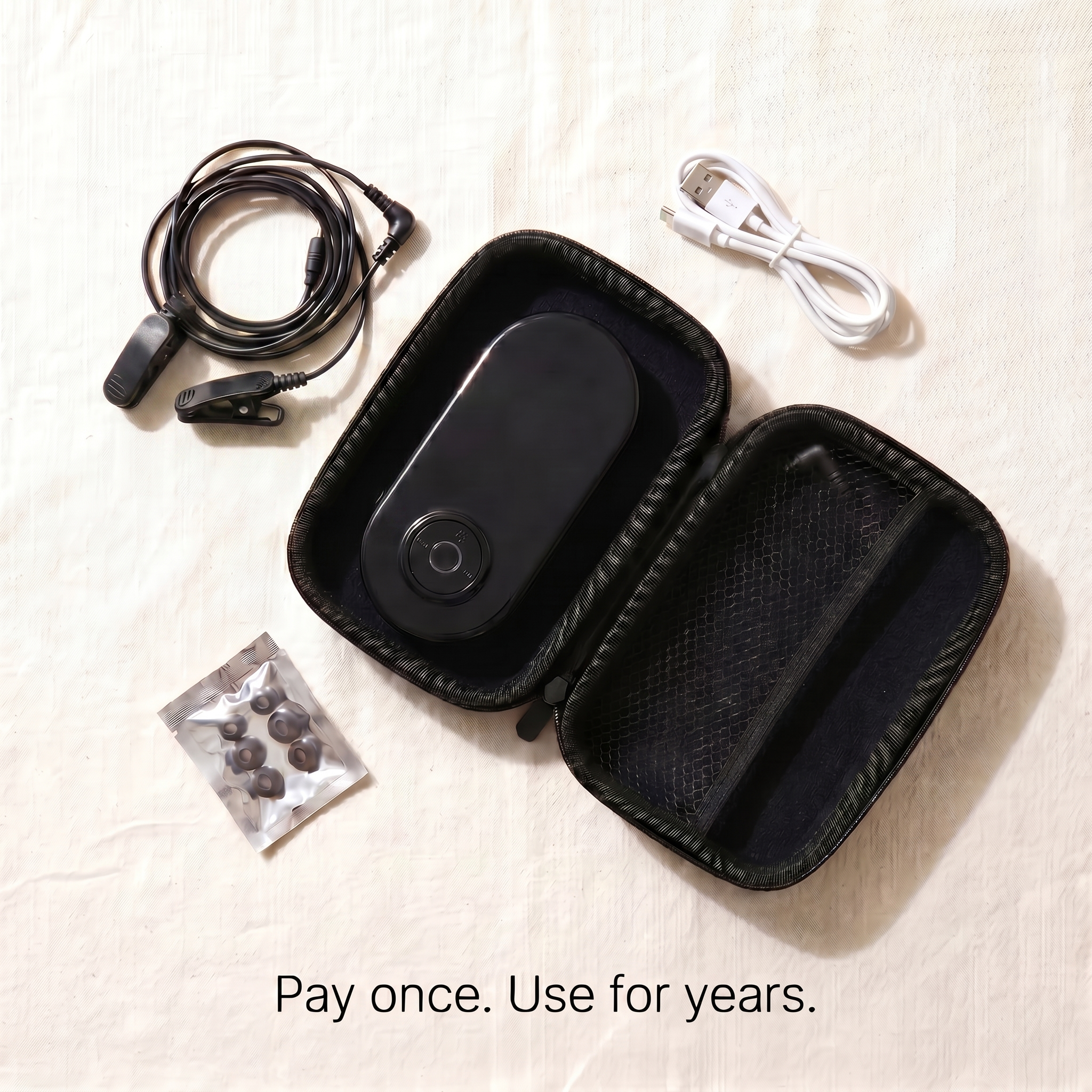
Lull Pro
The most fully-featured, professional-grade auricular vagus nerve stimulator available today — two ear contact points, four modes, and complete control over every stimulation parameter.


- 60-night home trial
- Free US shipping
- 2-year warranty
- 4 modes — Calm to full PRO control
- Built by Redera Labs
Lull
The first consumer-grade auricular vagus nerve stimulator built to the clinical 20-minute protocol.
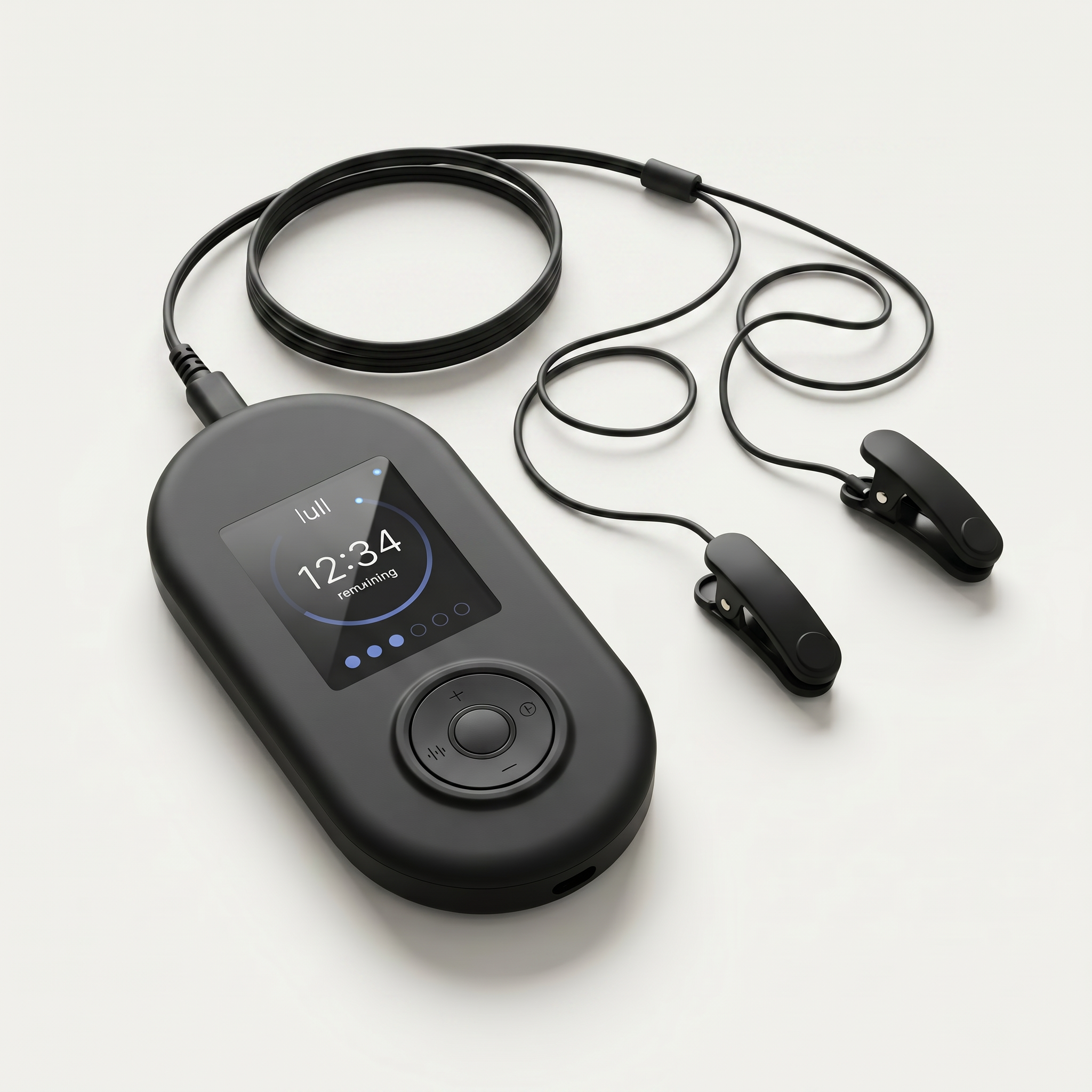
- 60-night home trial
- Free US shipping
- 2-year warranty
- Ships from US warehouse
- Built by Redera Labs
From the cohort, 90 days in
"Doubled my HRV in 8 weeks. Less brain fog. Sleep is the obvious one, but recovery score recovery is the thing I didn't see coming."
"I've tried everything in this category since 2022. This is the first one that's still on my desk at day 90."
"Post-workout downshift is the unlock for me. I sleep 90 minutes earlier on training days now."
The device that survived 90 days.
Lull is $249, ships free from a US warehouse, and comes with a 60-night home trial. No subscription. No app required. One-time cost.
Read about Lull →Lull is a wellness device sold by Intertil d.o.o. Not intended to diagnose, treat, cure, or prevent any disease. Consult your physician if you have any medical condition before use.