The high-functioning burnout no one at work can see
You've done therapy. You've done meditation apps. You've done the vacation. The baseline buzzing in your nervous system never quits. The reason: it's a different kind of problem than your psychiatrist has been treating.

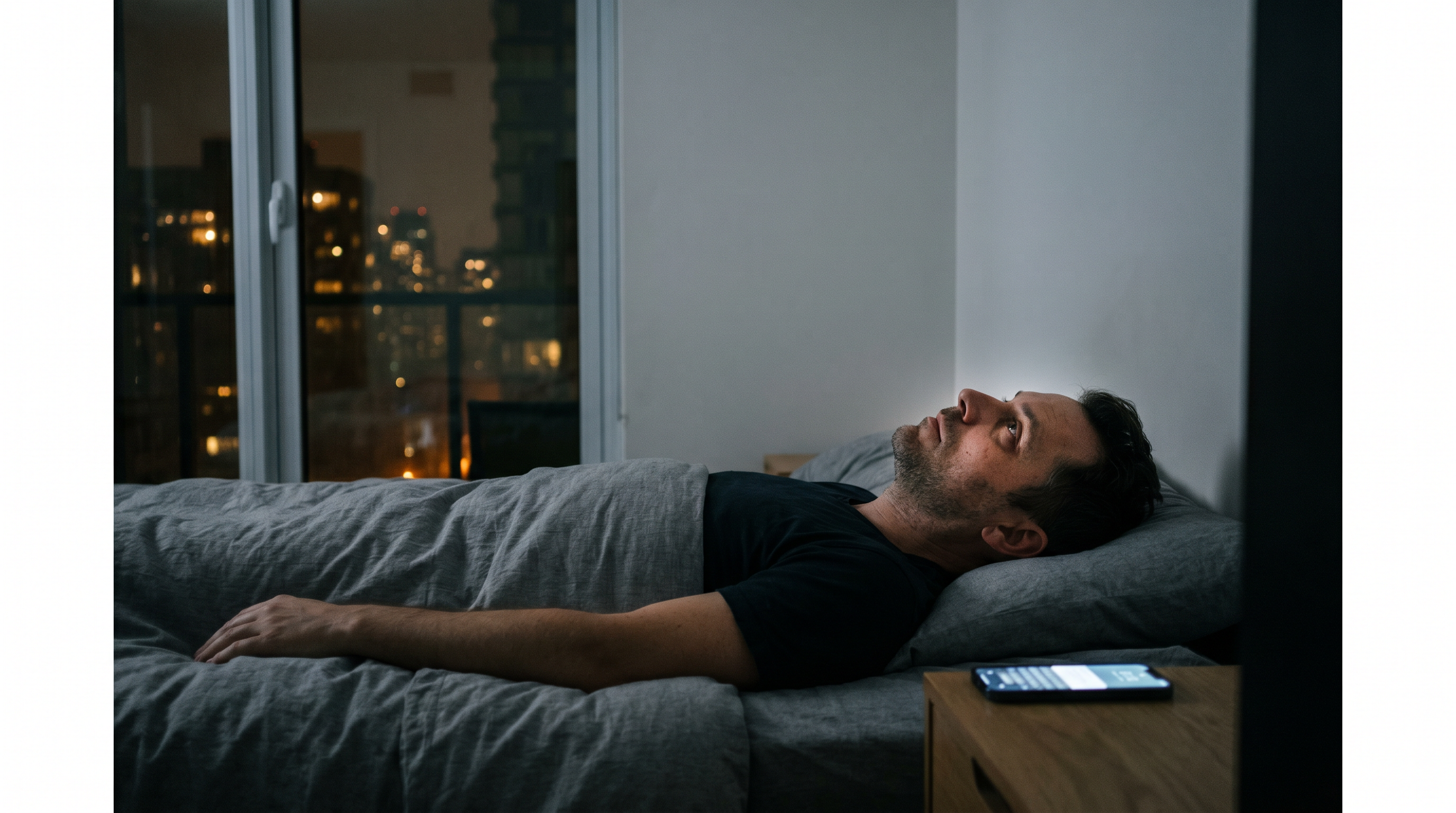
The single most-described scene in 200+ posts on r/managers, r/Lawyertalk, and r/cscareerquestions about burnout: lying awake in bed, drafting emails in your head.
The senior software engineer was crying in his Tesla in the office parking garage when his Apple Watch logged his fourth panic episode of the month. He had a 9:30 with his director. He'd done the breathing technique. He'd done the meditation. He'd done therapy. Six years now. He was, on paper, doing all the right things.
"It's still always there," he wrote on r/AskMen, anonymously, late that night. "You really just figure out how to put a mask on and compartmentalize it and push it to the back while you carry on with life."
Across r/managers, r/Lawyertalk, r/cscareerquestions, and r/Stress, the same scene appears thousands of times. A high-functioning professional has done every cognitive intervention available. They are still vomiting before work, still lying awake at 2 a.m., still feeling what one poster called "the baseline buzzing nervous-system feeling that wouldn't quit."
This piece is for the people who have done the work and still aren't sleeping. The shorthand: your therapy is the wrong altitude. What follows is six things doctors specializing in autonomic medicine have started saying about high-functioning burnout. Plus what they recommend after the apps and the SSRIs.
What autonomic-medicine doctors are saying about high-functioning burnout
Therapy is the wrong altitude for what your nervous system is doing.
Autonomic-medicine doctors put it gently, because no one wants to hear this after six years of weekly sessions. Talk therapy and CBT operate at the cognitive layer. The dysregulation you're carrying lives one layer underneath that.
Therapy works. It works on what it works on. The argument here is narrower: if you've done all the right things at the cognitive layer and still feel the buzz at 2 a.m., your autonomic nervous system is the layer that hasn't been touched.
"Therapy helps, I exercise, I don't drink much anymore, but there was still this baseline buzzing nervous-system feeling that wouldn't quit."— r/WellnessCoaching
Meditation apps were never going to fix this.
Calm, Headspace, Waking Up are evidence-based and useful for what they do: train cognitive attention. Trained attention is not autonomic regulation. A guided 10-minute session can't reset a sympathetic nervous system stuck in overdrive for fourteen years.
The dishonest part of the wellness app boom is the implication that working harder at meditation (better app, longer streaks, deeper breaths) will reach a layer the apps were never designed to reach.
"People would tell me to workout more, take melatonin, do meditation. I did it all and the stress would still creep in."— r/cscareerquestions
Sunday dread is a measurable nervous-system state, not a personality flaw.
The cluster of symptoms (gut tightness around 4 p.m. Sunday, low-grade nausea, racing pre-thoughts about Monday's calendar) has a clinical name in autonomic medicine: anticipatory sympathetic dominance. Your sympathetic nervous system pre-activates in advance of a stressor it's learned to expect.
This is not weakness. It's an autonomic reflex your body learned, and like all conditioned autonomic reflexes, it requires direct autonomic intervention to unlearn. Trying to talk yourself out of it is the same as trying to talk yourself out of a startle response. Different system.
"To this day when I hear that Heartbeat song I feel physically sick. It instantly brings back that feeling of Sunday evening dread which is burned into my soul."— r/UKJobs
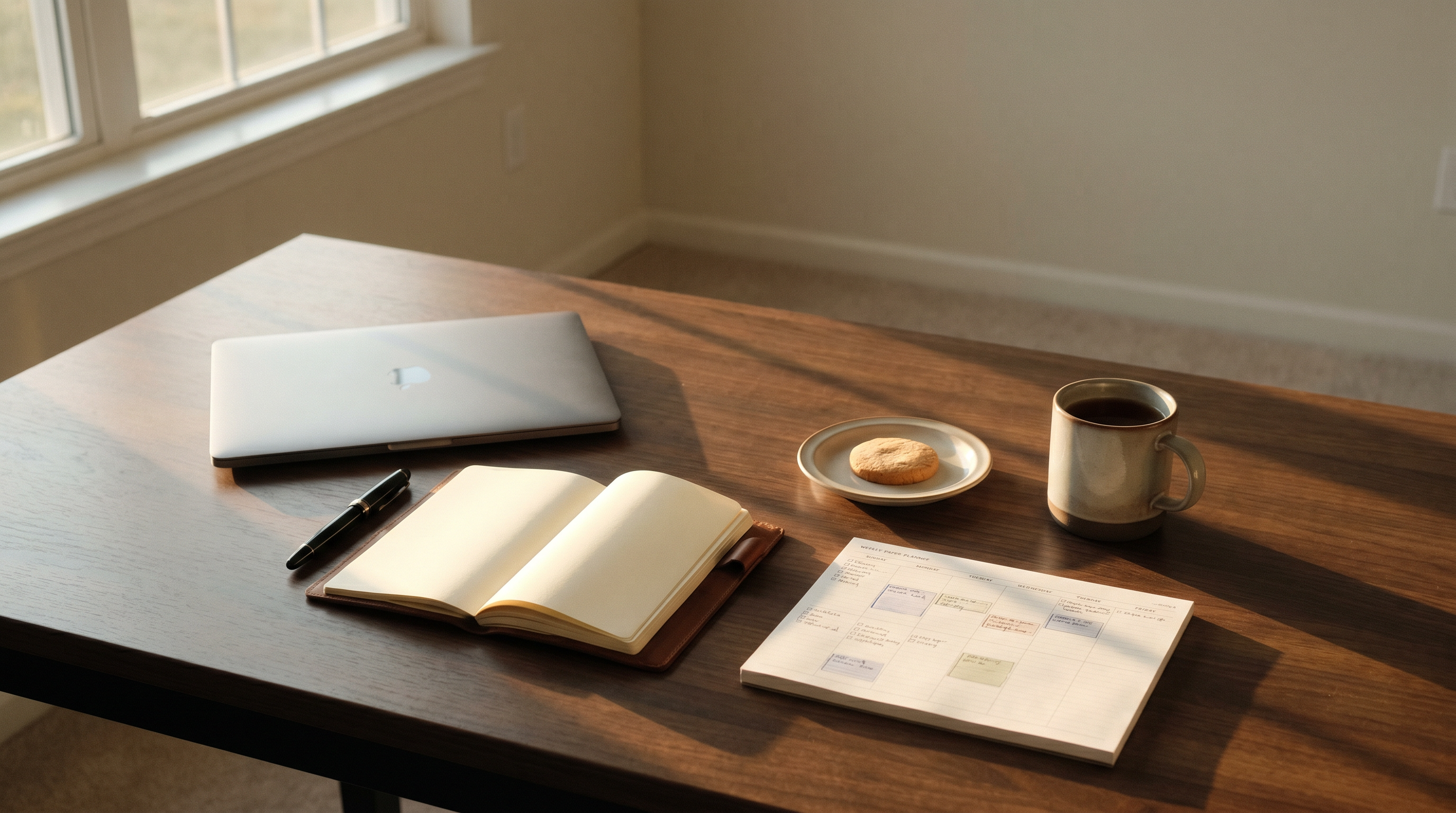
The body's 'off-switch' is the vagus nerve. Your psychiatrist's prescription pad doesn't reach it.
The vagus nerve runs from the brainstem to nearly every organ in the body. It drives parasympathetic tone, the system that switches the body out of sympathetic dominance and into rest, repair, and recovery. SSRIs don't engage it. Benzodiazepines don't engage it. Sleep medication doesn't engage it.
You reach the vagus nerve directly only two ways: implanted stimulators (FDA-approved for refractory epilepsy and depression since 1997), or transcutaneous stimulation of its auricular branch, the segment running through the cymba conchae of the outer ear.
Vacations don't reset autonomic tone. They suspend it.
The most common high-functioning-burnout self-treatment is taking time off. It feels great for the first three days. By day five, the buzz starts to return. By day seven, the dread of going back has set in. Time away addresses the stressor. It does not address the autonomic state the stressor has trained.
Once the autonomic nervous system has learned a stress reflex, removing the stressor temporarily doesn't unlearn it. It just lets the system rest at a slightly lower baseline before re-entering the same pattern.
The 20-minute protocol now being studied in autonomic medicine programs.
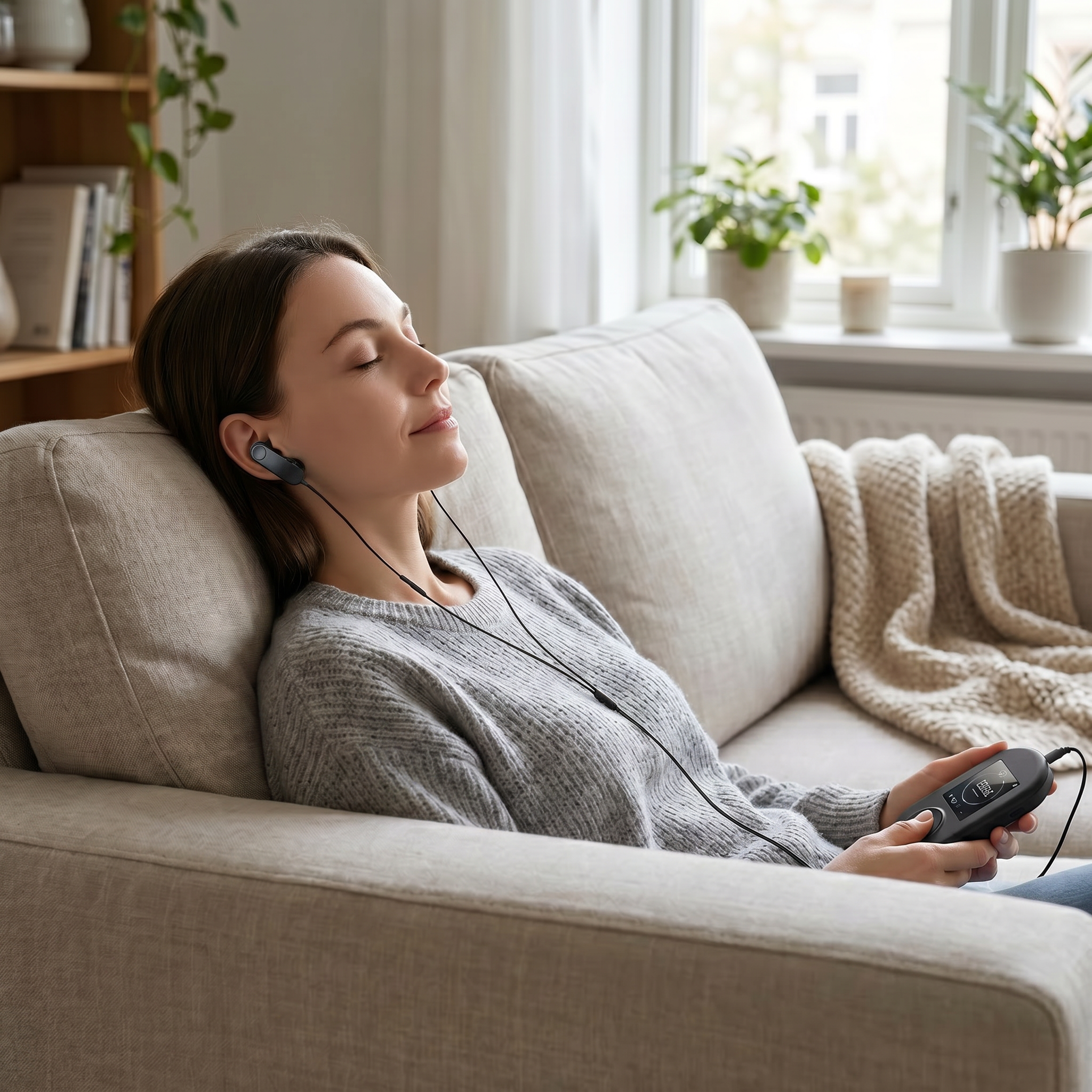
Auricular vagus nerve stimulation (taVNS) uses a clinical-grade ear-clip to deliver calibrated low-frequency current to the cymba conchae for 20 minutes per session. JAMA Internal Medicine 2024 showed reductions in nighttime cortisol and a measurable shift in HRV after eight weeks of nightly use. Scientific Reports 2026 confirmed the shift held at six-month follow-up.
The Cleveland Clinic autonomic medicine program now uses a version of this protocol. So does the Stanford ANS program. Until recently, it was only available in clinical settings.
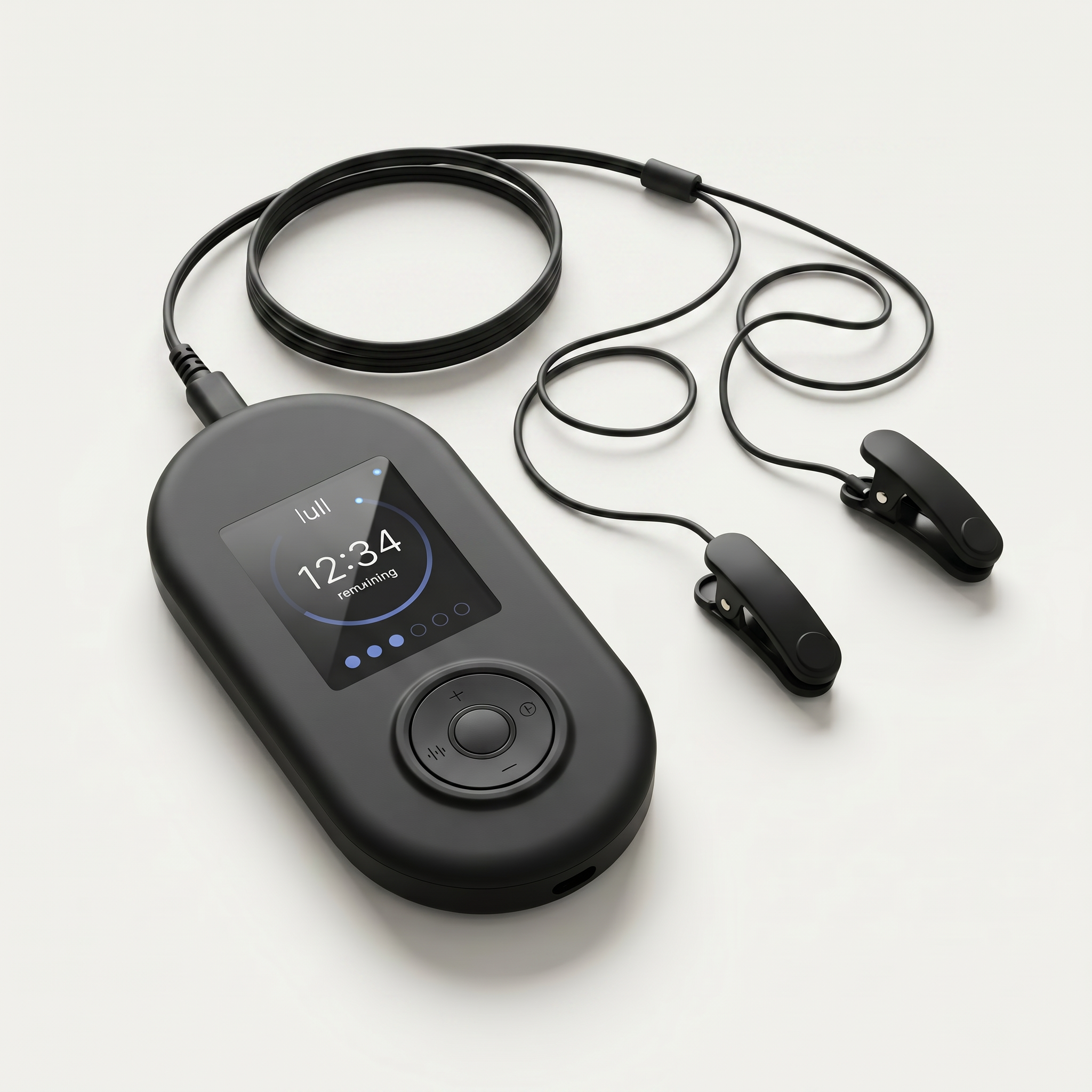
Lull Pro
The professional-grade auricular vagus nerve stimulator — two ear contact points, four modes, and full control over every parameter.


- 60-night home trial
- Free US shipping
- 2-year warranty
- 4 modes — Calm to full PRO control
- Built by Redera Labs
Lull
The first consumer-grade auricular vagus nerve stimulator built to the clinical 20-minute protocol.
- 60-night home trial
- Free US shipping
- 2-year warranty
- Ships from US warehouse
- Built by Redera Labs
From professionals using Lull
"The first thing in six years that has changed my baseline rather than masked it. I sleep through Sunday nights now. That alone has paid for the device."
"I had stopped admitting to my wife how bad it was. The 2 a.m. ceiling thing. Three months in, I'm not lying about it anymore — because there isn't anything to lie about."
"The Sunday dread is what fixed first. I noticed at week four. By week eight it was the rest of the week."
You've done the work. This is the layer underneath.
Lull is $249, ships free from a US warehouse, and comes with a 60-night home trial. No subscription. No app. One device.
Read about Lull →Lull is a wellness device sold by Intertil d.o.o. Not intended to diagnose, treat, cure, or prevent any disease. Consult your physician if you have any medical condition before use.